

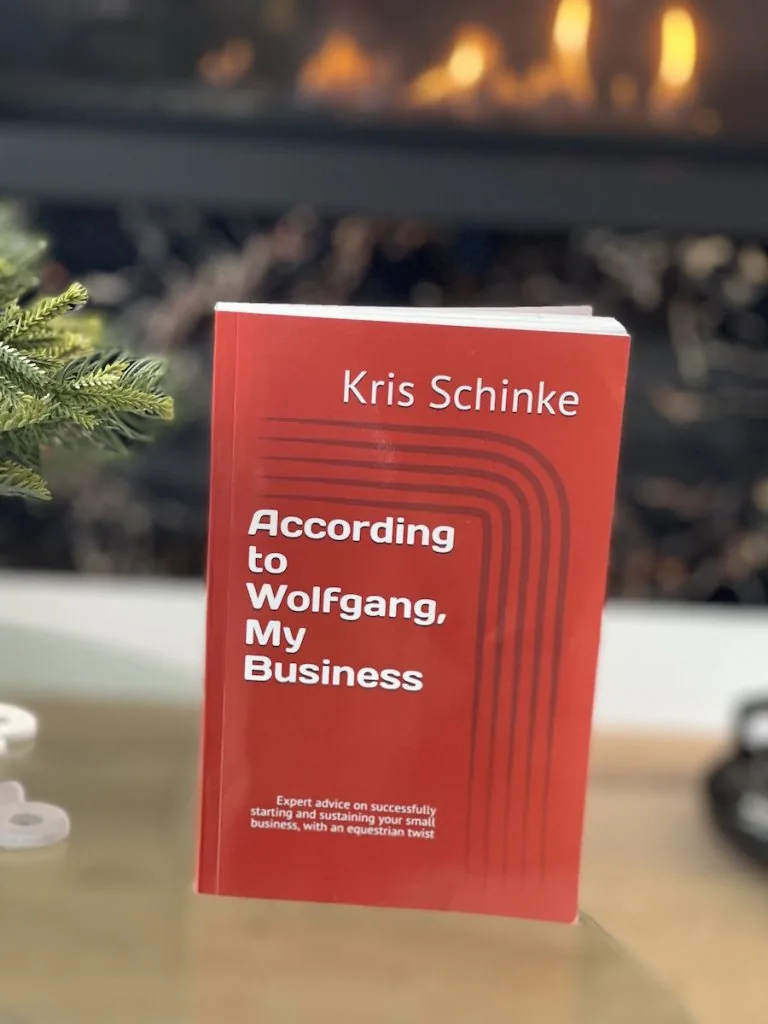
TL;DR: What makes a successful entrepreneur? While every business owner has a different journey, certain traits can contribute to long-term success. In this article, we explore six important traits of an entrepreneur, including purpose, passion, planning, inner drive, flexibility, and motivation. These lessons come from my father, Wolfgang, who built and operated a successful equestrian business for more than 40 years, and inspired my book, According to Wolfgang, My Business.
What Are the Traits of a Successful Entrepreneur?
Entrepreneurs across different industries often have certain traits in common. While their businesses, backgrounds, and definitions of success may be different, many share qualities that help them recognize opportunities, overcome challenges, and achieve their goals.
In my book, According to Wolfgang, My Business, I share lessons from my father, Wolfgang, whose successful equestrian business spanned more than four decades. His experience taught me a great deal about what it takes to start a business, keep it operating, and continue finding ways to improve.
The following six traits are qualities Wolfgang believes contributed to his success. Of course, traits are specific to an individual’s beliefs, personality, and experiences, so the list could be endless and different for everyone. However, these six offer a good starting point for anyone considering entrepreneurship or looking for ways to strengthen an existing business.
As you read through them, consider which traits come naturally to you and which ones might benefit from a little more attention.
1. Purpose: Know What You Want to Achieve
According to my father, Wolfgang, no one fulfills their dreams by accident.
If you really want something badly enough, you need to be prepared to do the research, learn as much as possible, and surround yourself with people who can help you along the way. Read books, make connections, ask questions, and find a mentor or coach who can provide direction, feedback, and a different perspective.
Wolfgang believed that preparation was an important part of building a successful business. He also understood the value of learning from others rather than trying to figure everything out on his own.
“I looked at the most successful facilities in my industry and made contact with as many successful people within the industry as I could to get ideas. I found it was a good way to build bridges and found most professionals were receptive.”
Another important consideration is learning to look at your business from your customer’s perspective rather than just your own. What do they need? What would make their experience better? What are other businesses doing well that you could learn from?
Starting a business also means recognizing that you may need to step outside your comfort zone, invest more time than expected, and make decisions without having all the answers. Being purposeful does not mean knowing everything in advance, but it does mean being willing to learn and take the steps necessary to move forward.
2. Passion: Believe in What You Are Building
There is a familiar quote that says, “A dream written with a date becomes a goal. A goal broken down into steps becomes a plan. A plan backed by action becomes reality.”
I think this captures an important part of entrepreneurship. When you spend time thinking about an idea, researching it, talking about it, and planning how to make it happen, that idea can become a passion. It creates excitement and a sense of urgency to get started.
Wolfgang dreamed about owning an equestrian establishment from the time he was a young boy. Many years passed before he was able to begin turning that dream into reality, and it took several more years for the business to become established. Throughout that time, he never lost sight of what he wanted to achieve.
Not all successful entrepreneurs start businesses because they are pursuing a lifelong passion. Sometimes a business begins because someone recognizes an opportunity, identifies a need, or simply wants to do something differently. However, I believe that for many successful entrepreneurs, their business eventually becomes something they are passionate about.
That passion can be especially important during difficult times, when the hours are long, the challenges seem endless, and the results are not coming as quickly as expected. Of course, passion alone will not make a business successful, but it certainly helps when you believe in what you are building.

3. Planning: Turn Your Ideas into Action
I started my book with some advice from Wolfgang that I believe every entrepreneur should consider.
“Start with a plan; without a plan you have nothing. A plan might be a dream, a goal, or a vision, but it is something you would like to achieve in the future.”
He goes on to say that before you finalize your plan, you need to decide where you want to go, what you want to achieve, why you want to achieve it, and when you want to get started. Of course, the biggest question is often how, but it is difficult to answer that question until you have a clear idea of what you want to accomplish.
Planning helps turn ideas into something you can act on. It also gives you a way to measure progress, make adjustments, and stay focused when the day-to-day demands of running a business start competing for your attention.
Wolfgang also encouraged sharing your plans with others. Talking about your ideas can lead to suggestions, opportunities, and connections you may not have considered. It can also provide some additional motivation because once others know what you are trying to achieve, there is a greater sense of commitment to following through. In Wolfgang’s case, he realized that his original plan would be too time-consuming and expensive to pursue alone, so he recruited a business partner. Rather than giving up on his dream, he found another way to make it happen.
This is something I think business owners sometimes overlook. A plan is important, but it does not have to remain exactly as it was originally written. As you learn more, circumstances change, and new opportunities arise, your plan should be reviewed and adjusted.
4. Inner Drive: Have the Determination to Keep Going
Being a successful entrepreneur means more than having a great business idea. It requires the right attitude, determination, and the willingness to overcome obstacles without becoming discouraged. Successful entrepreneurs tend to set ambitious goals for themselves, but they also recognize that achieving those goals takes time, effort, and perseverance.
Resourcefulness, a willingness to improvise, and a strong determination to succeed can make a significant difference, particularly when things do not go according to plan. Wolfgang worked full-time at another job for the first eight years after starting his equestrian business. He knew he could eventually leave his day job, but not before his new business was well established. Much of his spare time, including vacation time, was invested in the business. He loved what he was building, and that enthusiasm helped him stay committed through those early years.
I think there is an important lesson in his experience. Having inner drive does not necessarily mean taking unnecessary risks or expecting everything to happen immediately. Sometimes it means being patient, making practical decisions, and doing what is required to give your business the best chance of long-term success.Entrepreneurs will always encounter challenges, and there will be times when things do not work out as expected. What matters is how you respond, what you learn, and whether you are prepared to keep moving forward.
5. Flexibility: Be Prepared to Change
Another important trait of a successful entrepreneur is flexibility. Business owners need to be open to new ideas, willing to consider different approaches, and prepared to make changes when something is no longer working.
Being headstrong or stubborn about how things have always been done can have negative consequences. Customers change, markets evolve, and new opportunities emerge, so it is important to regularly consider whether your products, services, and business practices are still meeting the needs of your customers.
Wolfgang’s original business was a children’s summer equestrian camp. However, it did not take long for him to realize that keeping horses throughout the year was expensive, especially when the business was only generating revenue during the summer months.
Rather than continuing with the same approach, he looked for other ways to use the facility and expand the business. He introduced spring and fall weekend camps, adult riding programs during the winter, and eventually more than twelve horse-related services for equestrians of all ages.
This willingness to adapt helped Wolfgang grow his business while making better use of the resources he already had.
I believe this is an important lesson for business owners in any industry. Sometimes we become so focused on the original idea that we overlook opportunities to do things differently. Being flexible does not mean abandoning your goals, but it may mean changing how you achieve them.
It is worth asking yourself occasionally whether there are opportunities you have not considered or changes you have been reluctant to make simply because you are comfortable with the way things are.
6. Motivation: Keep Looking for Ways to Improve
Competition should not scare an entrepreneur. Instead, it can provide motivation to improve, find new opportunities, and understand what makes your business different from others in your industry.
Successful entrepreneurs are generally motivated to do their best, but that motivation can come from many different places. Some want to build a financially successful business, while others are motivated by the opportunity to create something meaningful, provide employment, or build a business that can eventually be passed on to the next generation. Wolfgang’s motivation came from doing what he loved and wanting to be recognized for owning a well-known equestrian facility. His goal was to develop a business with an international reputation, and he was proud to accomplish that.
He also understood the importance of knowing his competitors and learning from what others were doing. However, there is a difference between learning from your competition and simply copying them. Understanding your competitive advantage and what makes your business valuable to customers is far more important. Another part of staying motivated is being willing to accept constructive criticism. Asking for feedback, listening to customers, and recognizing where improvements are needed can help you make better decisions. Not every suggestion will be right for your business, but being open to different perspectives can provide valuable insights.
Even after many years in business, there is always something new to learn, and entrepreneurs who remain curious and motivated are often better prepared to recognize opportunities for improvement.

Can Entrepreneurial Traits Be Developed?
After reflecting on Wolfgang’s experiences, I believe these six traits are closely connected. His passion gave him the enthusiasm to pursue his dream, while his purpose and planning helped him turn that dream into a business. His inner drive kept him going through the early years, and his flexibility and motivation helped him continue improving and expanding the operation.
I also believe that many of these traits can be developed over time. You may naturally be a strong planner but struggle with flexibility, or you may have tremendous passion and motivation but need help turning your ideas into a practical plan.
Recognizing your strengths and understanding where you could benefit from support is an important part of being a successful business owner.
As a business grows, the challenges also change. The skills required to start a business may be different from those needed to manage employees, develop a leadership team, or prepare for the future. Being willing to learn, ask for advice, and consider new approaches can make a difference at every stage.
Wolfgang’s entrepreneurial journey lasted more than 40 years, and while every business owner will define success differently, I believe there is something valuable to learn from his experience.
Building on Your Entrepreneurial Strengths
Whether you are just starting your entrepreneurial journey or have been running a business for many years, taking time to reflect on your strengths, challenges, and future goals is worthwhile.
At X5 Management, we work with business owners and leaders who want to strengthen their leadership capabilities, navigate challenges, and make informed decisions about their businesses. Through Business Coaching and Strategic Advisory, we provide an opportunity to explore ideas, gain different perspectives, and develop practical plans for moving forward.
Sometimes having someone to challenge your thinking, ask the right questions, or provide a different perspective can be just what you need.
If you are looking for support as you continue building your business, connect with X5 Management to learn more about how we can help.
About the Author
Kris Schinke, MBA, is Vice President, Integration, at X5 Management. She brings extensive executive leadership experience in the private and not-for-profit sectors and is passionate about helping business owners and leaders achieve their goals. As a business and leadership coach, Kris focuses on leadership development, communication, teamwork, and business growth.
Kris is also the author of According to Wolfgang, My Business, a practical guide to starting and sustaining a small business, inspired by her father Wolfgang’s successful equestrian business spanning more than 40 years.